Filed November 9, 2026
Flat rate vs. variable rate seeding: what actually changes at planting
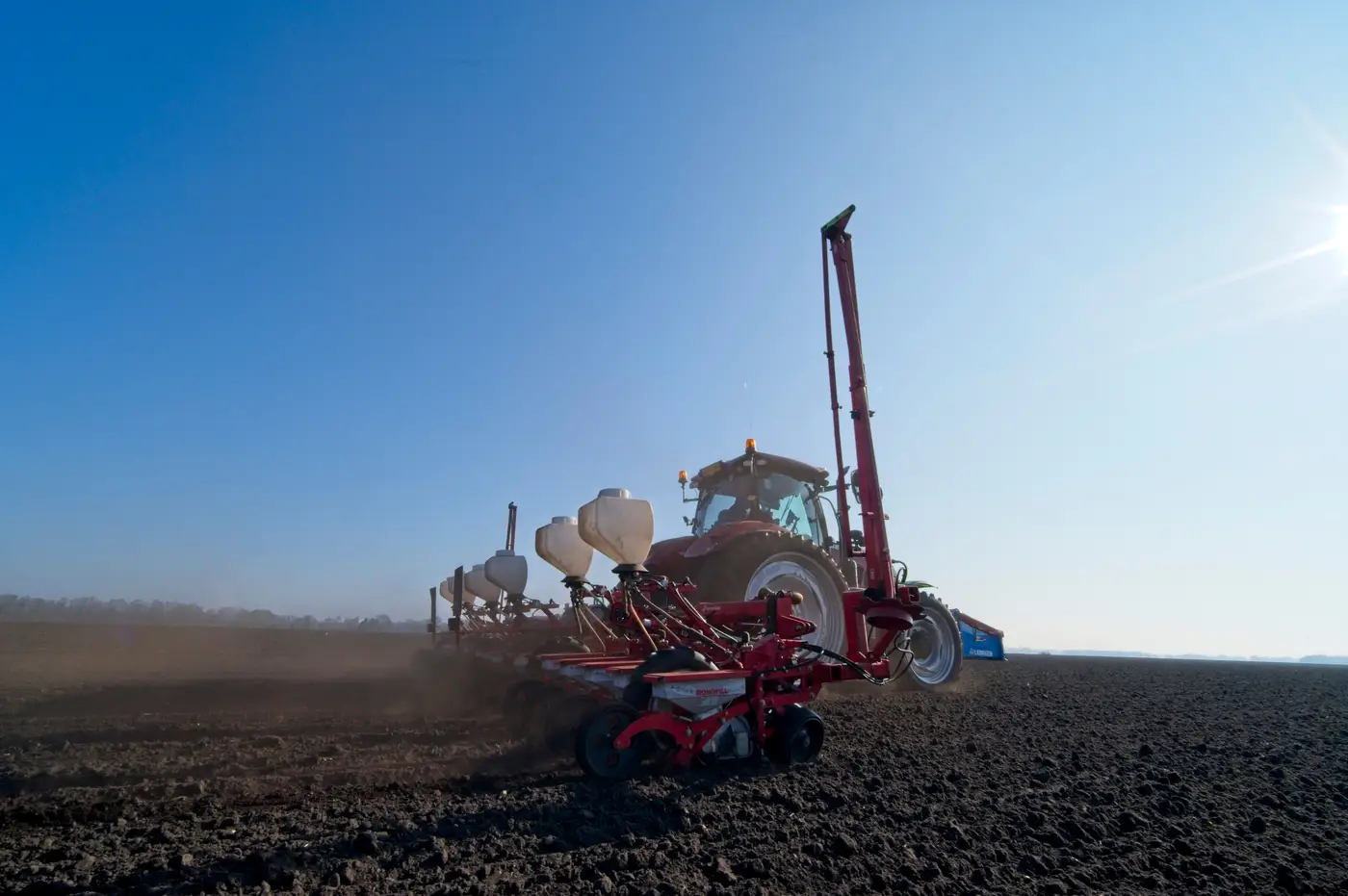
A flat rate plants the same population across a field no matter what the soil or the previous season told you. Variable rate changes that population zone by zone, on the go, based on a prescription file the planter's controller reads as it crosses the field. Everything else about the day stays the same: same planter, same operator, same field pass pattern. The difference is what the drive units are told to do row by row.
What the controller is doing
With a flat rate, you punch in one number before you hit the field and that's the population for the whole farm, whether it's the heavy ground on the north end or the sandy ridge that's dropped yield for three years running. The rate controller doesn't need a prescription file because there's nothing to switch to. One setting, one pass, done.
With variable rate, the controller is reading a prescription file tied to GPS position. As the planter crosses a zone boundary, the controller bumps population up or down and the drive units adjust seed drop in real time. The operator isn't doing this by hand and isn't watching a screen and guessing when to change settings. The file is doing the deciding; the controller is doing the executing. That's the whole mechanical difference. Nothing about planter speed, down pressure, or row spacing changes because of the rate file itself, though a grower running variable rate well is usually also tuned in on down pressure by soil type anyway.
Building a prescription file worth loading is the hard part of this; the planting pass itself takes no more time than a flat-rate pass would. A flat rate needs no zones because it has no zones. A rate-by-zone script needs defensible zones, and that means something to draw them from: yield history, soil type, EC data, or a vigor pattern that's shown up in that field across a season rather than a guess at what "probably" varies.
Where the zones should come from
A lot of early variable rate work leaned on soil type alone, because that's what was on hand. Soil maps are a reasonable starting point but they're static. They don't catch the thin spot that only shows up in a dry year, or the headland that's been compacted by three seasons of the same turn pattern, or the section of a field that's performing better than its soil type would suggest. A zone map built once and reused for five seeding seasons is really just a flat rate with extra steps.
What moves the needle is zones drawn from what the crop is doing in-season, across enough passes to see a pattern rather than one weather event. A biomass and vigor gradient captured through the season, from emergence through canopy closure, shows you where growth is consistently ahead or behind, which is a different thing than where the soil survey drew a line forty years ago. That's the gap between a rate file that reflects this year's crop and one that reflects a map somebody made once.
This is the part of the job that's genuinely time-consuming for an agronomist running scripts across a book of grower accounts: pulling imagery, deciding where the real zone breaks are, and turning that into a file the controller can read without a format error on the tailgate. Field Variability takes the weekly multispectral pass, 3 to 10 m resolution across the season, and turns the biomass and vigor gradient into a per-zone rate file for seed, fertilizer, and chemical, built to load straight into the machine controller instead of a flat rate across the whole field. If you're building these scripts by hand right now, see how that file gets put together before next season's imagery starts rolling in.